Fair trade and the economic crisis

After a decade of euphoric growth, sales of fair trade products have slowed in several European countries.
The economic crisis has hit and many players have had to adjust their strategies.
How is the fair trade sector reacting?


How can it ensure that solidarity consumption is not sacrificed on the altar of falling purchasing power now impacting a significant number of households?


Fair trade breaking apart?

Fair Trade USA recently left Fairtrade International, the world's leading fair trade federation to launch its own initiative. Small producers in Latin America have created their own certification label in response to the opening of the Fairtrade Max Havelaar label to large plantations.

Tensions are increasingly flaring within a movement that has different development visions and approaches to fair trade. Will it fall apart?


Forests, a development challenge

The rate of destruction of forest cover has significantly increased over the past ten years, particularly in countries in the South. This endangers the overall development of these regions. Southern countries are faced with the erosion of their natural resources. Meanwhile , they suffer the most from climate change, of which deforestation is one of the main causes.

The United Nations declared 2011 the International Year of Forests. Hereby the UN emphasized the importance of extensive forest cover for millions of people around the world. There were initiatives taken at international level, but the challenge remains: the preservation of forests on one hand and the economic development on the other are difficult to reconcile.

Traditionally, the Belgian development strategies focus primarily on economic and social issues. Today they are combining the need for growth and preservation of the environment in their programmes.

Guarantee systems for the sustainable production of cotton

Cotton is a precious godsend for farmers. But growing this crop also has considerable social and environmental impacts, which organic  agriculture and fair trade are trying to address. Therefore, different guarantee systems have been developed. Here is an outline of how some of them work and the guarantees they provide.

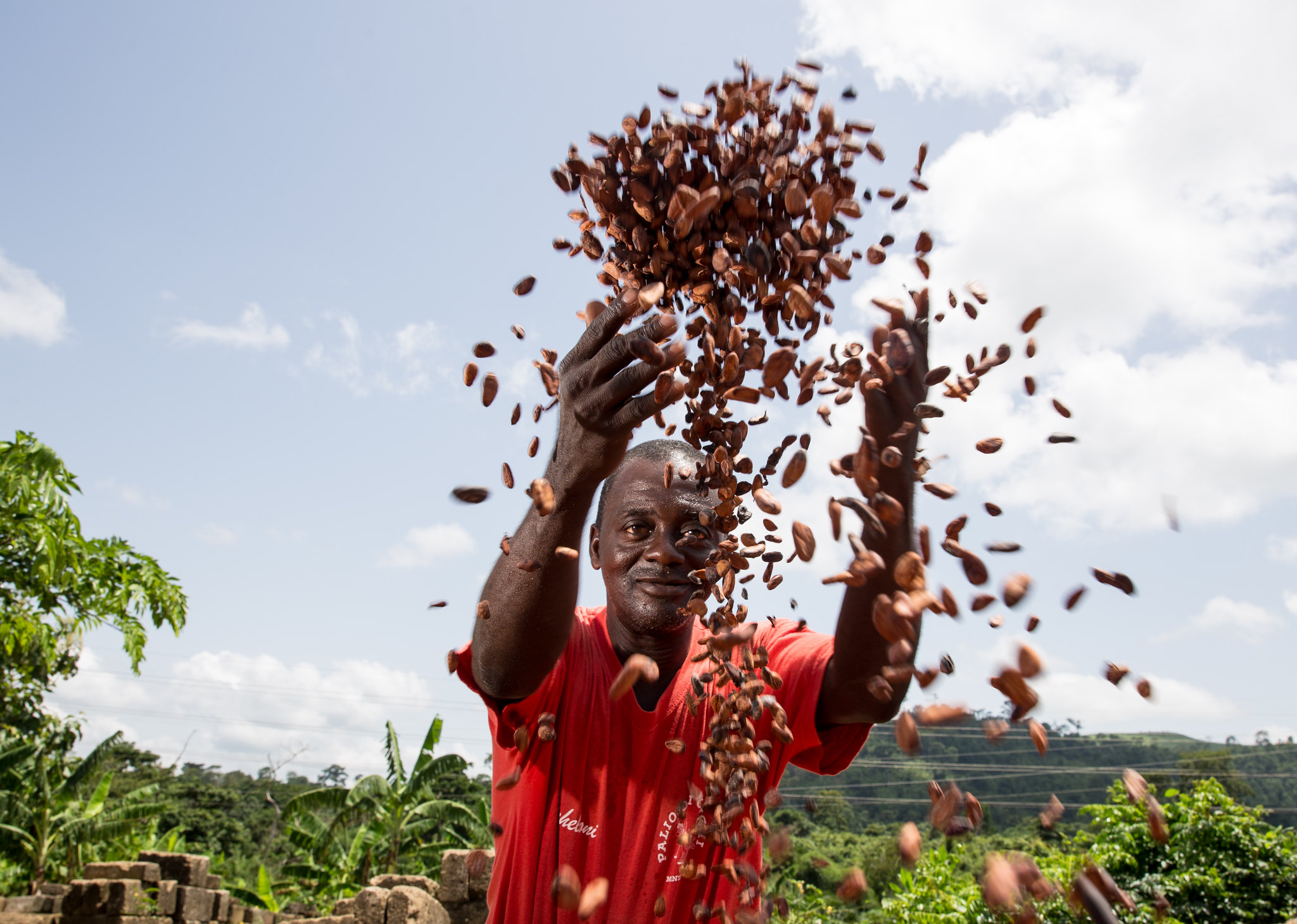
Ethics in the chocolate value chain

Surveys conducted between 2009 and 2011 show that more than 250 000 children are used and exploited in cocoa plantations in West Africa (mainly in Ivory Coast). In 2001, some of the big names of the global chocolate industry signed the Harkin-Engel protocol and committed to addressing the worst forms of child labour. Ten years later, none of the goals set by this protocol were fully achieved.

In the article "Ethics in the chocolate value chain" the Trade for Development Centre describes the complexe structure which excludes poor cocoa farmers from sharing in the profits. The article lists some initiatives set up by the professionals and the big names in the sector.
 

Gerelateerde info

Cocoa

Cocoa is a mythical food with surprising origins that has made its way around the globe. Starting in Central America, it spread in the holds of merchant ships during the era when the world was opening up to explorers. Limited to the zone between the tropics, from which it cannot escape, the cocoa tree is fragile and delicate and its trunk and branches hold a bizarre, inedible fruit. A fruit, though, that is highly prized.

Pages