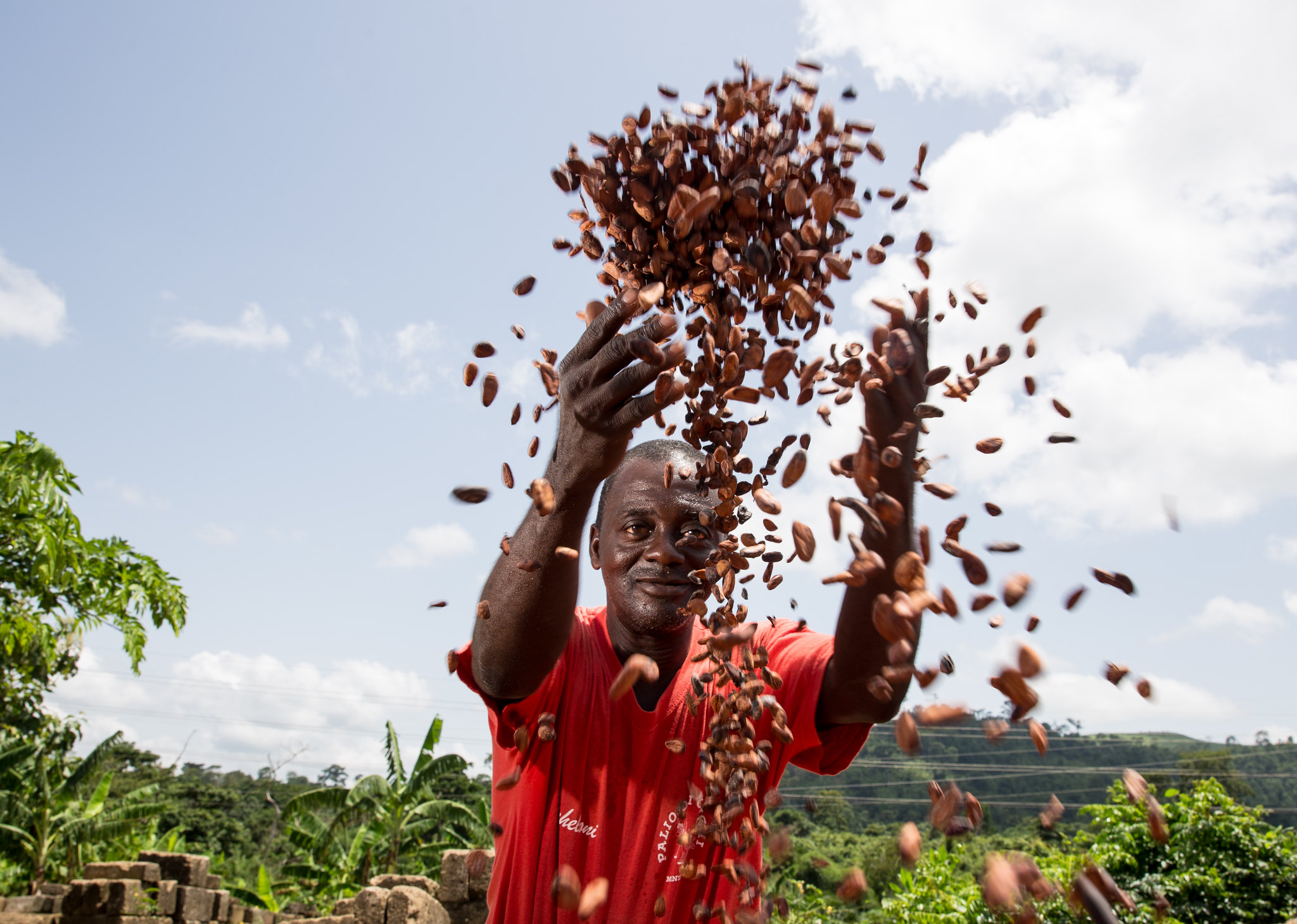
Fair Trade, Sustainable Trade ? Is fair trade, a vector for solidarity among nations, an initiative that should be abandoned as soon as possible for the health of our planet? This would have been an absurd question in the nineties but it is becoming more and more relevant with the emergence of the environmental challenges facing Humanity. Fair trade, in the South and the North, brings products from the South to the North. However, this exchange of products carries an ecological cost. Can it be avoided? Wouldn’t it be better to promote local products in season?
This brochure offers an analysis of the relationship between the environment and fair trade. This is neither the official stance of BTC nor an exhaustive study of positions on the matter. It is a thoughtful report that should be added to the already thick file on fair trade in the 21st century, in line with the new challenges facing the world. Fair trade - Sustainable trade ? [1.66 MB]
European and Belgian market for Certified coffee
Access to accurate and relevant market information is a virtual prerequisite to sustainable planning, production and trade, particularly within the context of market volatility. As smaller producers become increasingly exposed to international markets, there is a corresponding urgency in having up-to-date market information. This report of the Trade for Development Centre wants to provide relevant information for producers and producer groups - within the trade context.
More concretely, this report makes an attempt to capture all relevant information on the international coffee market – ranging from the worldwide economic structure of this market to characteristics and related prices for different types of coffee, certification and labelling information, product requirements and future strategies by some key actors in the coffee value chain, and major trends in consumer preferences and –behaviour. [Download the report]
Organic Agriculture in southern Countries An oportunity for Sustainable Development ? Is the farming and commercialisation of organic products an opportunity for southern countries? There are many arguments in favour of organic farming: higher incomes, labourintensive employment, greater economic independence, the maintenance of biodiversity, health guarantees...
But there are also many challenges to creating an organic farming sector in the countries of the South. For this movement to become a reliable alternative to the existing agricultural model, consumers must be convinced of its legitimacy, both in the South and in the North.
Certification – through labelling – is key to providing a guarantee to consumers that the imported products do indeed originate from organic agriculture. But certification comes at a cost. Do new markets compensate for that cost? And how to reconcile certification, which today is done by independent bodies, with the desire of many farmers’ organisations to have their own quality control systems recognized? Organic certification very often leads to commercialisation in supermarkets. Are these an opportunity or a risk for the living conditions of producers in the South? The emergence of international organic trade also raises environmental concerns. Although the environment is protected in the region of production, doesn’t transportation of goods over such long distances counterbalance this benefit on the global scale? The Trade for Development Centre covers these issues with actors in the field, who are setting out signposts in favour of organic farming, which is a full-fledged partner of development. [Download the pdf]
Guide to Fair Trade  Finding Fair Trade resources has never been easier! Want to know where to get the latest Fair Trade products? Need organizing material for your business or organization? Discover all the possibilities of Fair Trade in Co-op America’s new full color Guide to Fair Trade! Inside you'll find descriptions of dozens of national and international Fair Trade products.
Download the pdf
Fair Trade A Beginners Guide By Jacqueline DeCarlo What’s wrong with buying regular coffee? Does Fair Trade necessarily mean ethical trade? What impact can consumers have on global economics? Fair Trade: A Beginner’s Guide reveals why Fair Trade means more than just bananas, coffee, and chocolate. Author and activist Jacqueline DeCarlo explains the principles behind Fair Trade and its development into a powerful economic tool. Packed with inspiring ways to make a difference, this book will encourage readers of all backgrounds to help end poverty, environmental destruction, and human exploitation. Jacqueline DeCarlo was the director of the Fair Trade Resource Network, leading the organization’s growth and development before joining Catholic Relief Services in 2005. She is currently a professional writer.
 ‘Zapizapu Crosses the Sea’ is a kids book about why it’s good to pay fair. It’s aimed at 5-8 year olds, and the story will take them to discover the delicious zapizapu and the people that grow it. The story reveals what happens when people decide to pay fair price for the zapizapu |